Aviation
Aircraft are one of the many tools used to help fight wildfires in Texas. They help firefighters on the ground contain wildfires and protect people and structures.
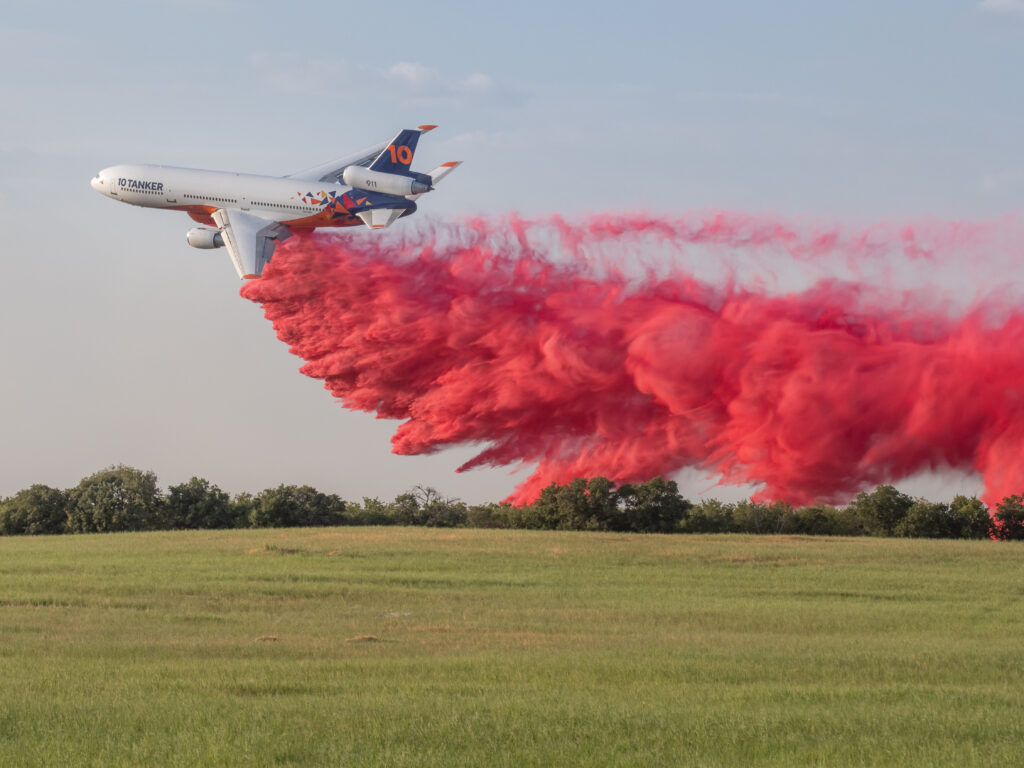
Aviation assets provide intelligence to fire managers, can reach inaccessible areas, carry large volumes of water and retardant to slow the spread and reduce the intensity of wildfires, and work at a rapid pace to minimize damage to structures and property.
Firefighting aircraft in Texas follow strict state and federal guidelines for safety, operation, training, and equipment. We currently obtain firefighting aircraft through a Call-When-Needed agreement with the federal government. This allows aircraft to be stationed strategically around the state during periods of critical fire weather.
Thanks to the 89th Legislative Session, we were appropriated $257 million for the purchase, operation, and maintenance of wildfire suppression aircraft through HB 500.
We are in the process of purchasing and building our aviation fleet. The federal agreement will remain in place as additional aircraft resources for the state are purchased.
Agency aircraft
In 2025, we established the Aviation Task Force, which included 12 partnering organizations, to advise through the procurement process of purchasing aircraft. The decision was made to purchase medium lift helicopters, large airtankers, and multi-mission fixed wing aircraft.
Once purchased and delivered, these aircraft will be based in strategic locations across the state to allow for staffing and effective response. Aircraft will have the ability to temporarily relocate to other parts of the state as wildfire risk dictates.
The aircraft will be built to perform other missions as well, such as search-and-rescue, mapping, and data-gathering missions when not assisting with wildfire response.
-
Helicopters are used to deliver water to wildfires, transport firefighters and cargo, support reconnaissance, and conduct medical evacuations.

-
Multi-mission aircraft are used for wildfire detection, reconnaissance and situational awareness.

Safety
WARNING: If you fly, we can’t.
Flying drones near wildfires is dangerous. It puts firefighters at risk and can force aerial operations to shut down, delaying efforts to protect lives, homes, and natural resources.
Firefighting aircraft often fly as low as 150 feet, the same altitude as many hobby drones. If a drone is spotted, aerial firefighting may be suspended, allowing the fire to grow.
There are times when aircraft are unable to operate: when there are extremely dangerous wind speeds, thick smoke that limits visibility, drones operating in the same airspace, maintenance and repair needs, and pilot availability due to flight time regulations.
Once these conditions subside or are alleviated, aircraft can continue supporting ground resources in wildfire suppression.
Fixed-wing program
Fixed-wing aircraft are ordered based on their capabilities, size, and classification. Some fixed-winged aircraft you might see in Texas are:
- Large Air Tankers (LATs)
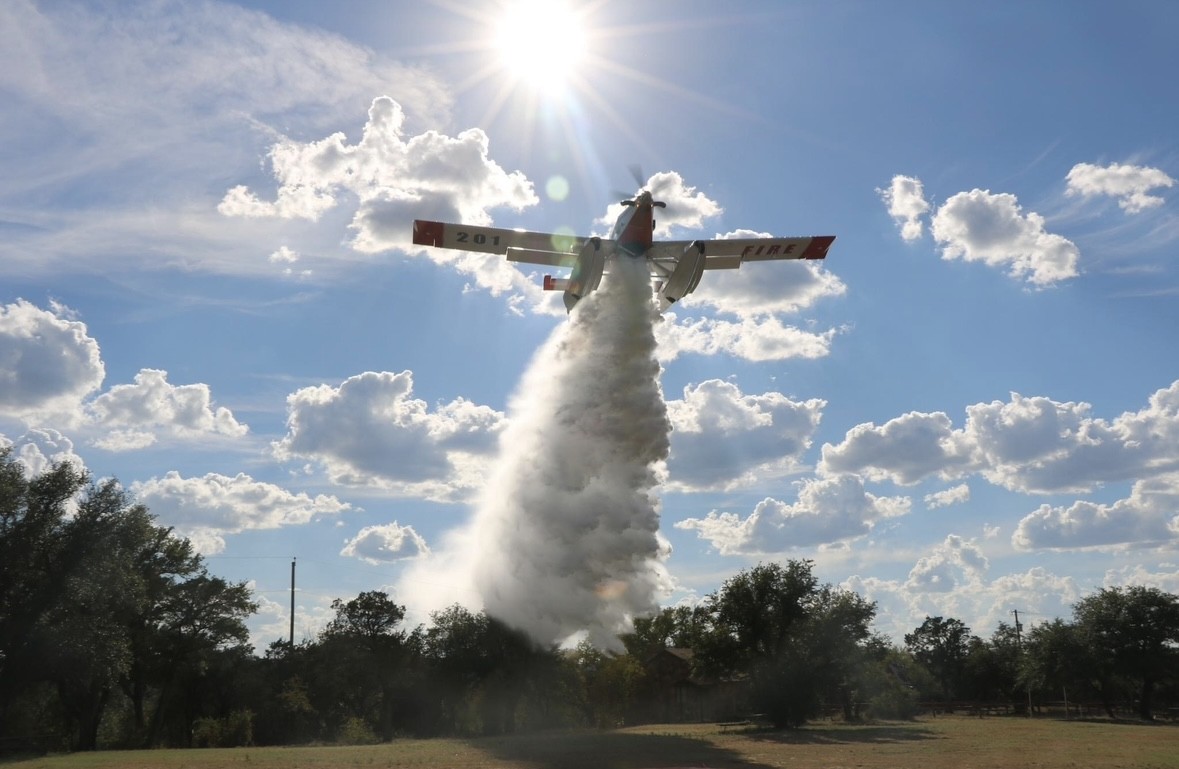
- Single-Engine Airtankers (SEATs)
- Other small aircraft used for reconnaissance and air tactical supervision
- Water scoopers
- Very Large Air Tankers (VLATs)
Each of these aircraft types are essential to our state’s aerial firefighting operations.
Capabilities
VLAT’s
- Can carry over 8,000 gallons of retardant
- Largest aircraft used in aerial firefighting today
LAT’s
- Can carry 2,000-4,000 gallons of retardant
- Smaller than VLAT’s
SEAT’s
- Can carry up to 800 gallons of retardant or water
- The smallest airtanker
Unmanned aircraft systems program
Unmanned Aircraft Systems (UAS), also known as drones, are also used to fight wildfires in Texas.
Drones are used to
- Detect hot spots
- Gather data
- Gain situational awareness
- Map wildfires
- Monitor wildfires

We require all UAS Pilots to be Part 107 certified through the Federal Aviation Administration (FAA). Pilots must stay current on their training and certifications to maintain safe operations.